Industrial tooling & fixturing
Large-Scale Composite Tooling in Texas.
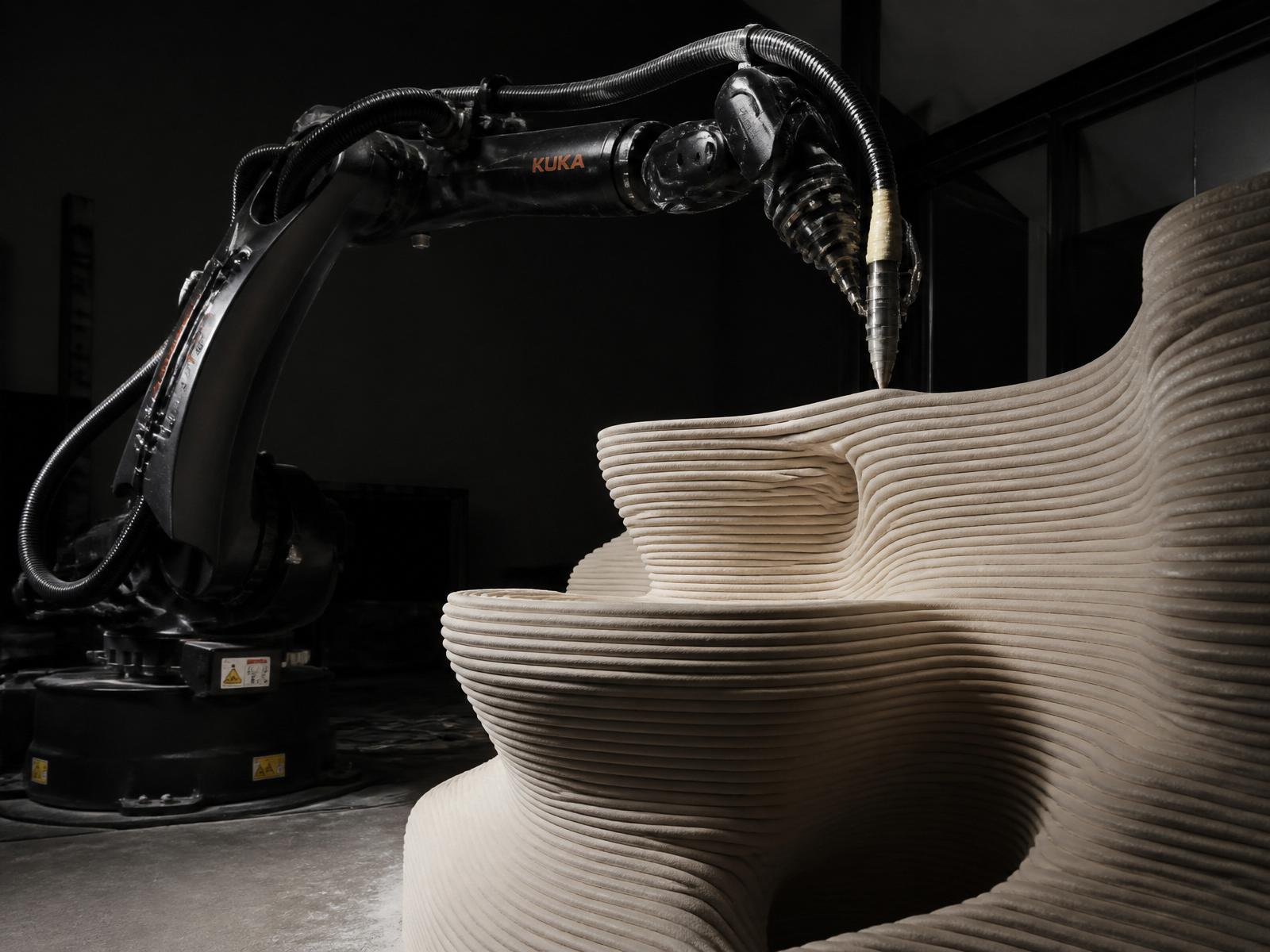
Printed tooling for teams that build big parts — layup tools, form blocks, molds, concrete formwork, jigs and fixtures, engineered and produced in Houston and delivered to your shop floor.
What we tool
Tools sized for the parts, not the printer.
Tooling is a different conversation from architecture. What matters is the surface the tool has to hold, the process it has to survive, and how many pulls you need out of it. We scope those three things first and tell you honestly when a machined or conventional tool is the better buy.
Large composite tools
Single-piece or keyed multi-segment tools for parts too large to pattern economically by hand.
Layup tools
Male and female layup surfaces printed near-net, then surfaced to the finish your release system and part require.
Form blocks
Forming and trim blocks that carry a defined surface and locating features, reprintable from archived geometry when they wear.
Molds & thermoforming patterns
Molds and thermoforming patterns where the geometry is the cost driver — complex surfaces print at the same rate as simple ones.
Concrete formwork
Curved, faceted and one-off formwork for architectural concrete, produced as a printed form rather than a built-up carpentry assembly.
Jigs & fixtures
Assembly jigs, drill and trim fixtures, weld positioners and holding fixtures dimensioned to your shop's handling.
Why printed tooling
01
Geometry is free, complexity is not penalised
A printed tool costs broadly the same whether the surface is flat or doubly curved, so the tools that are hardest to pattern by hand are the ones that benefit most.
02
One-offs make sense
There is no pattern to build first. Single-use molds and non-repeating formwork stop being a cost problem, which changes what a design team can specify.
03
Made in Houston, close to your shop
Tools are engineered, printed and finished in one Houston facility and trucked to Gulf Coast and Texas plants without an import cycle in the schedule.
04
Reprintable from the source definition
The tool's geometry is archived, so replacement is a print — not a redevelopment exercise with a new pattern maker.
Material families and their finishing options are documented in the materials library, the print envelope and tolerances on specifications, and the stage gates from enquiry to delivery on process. Our full production scope is on capabilities, with the regional picture on additive manufacturing in Texas.
Who we tool for
What do you need from us to quote a tool?
The part geometry or the tool surface, the process the tool has to survive, the number of pulls you expect, and how you intend to handle and locate it. If the tool surface has to be machined after printing, tell us the tolerance you need it held to.
Do you machine the tool surface after printing?
Tooling is normally printed near-net and then surfaced to the required finish. Whether that step is needed, and how much stock is left for it, is settled during the feasibility review for your process.
Which material is right for my tool?
It depends on the process temperature, the release system and the number of pulls. We select from the families documented in our materials library rather than committing to a single stock recipe, and confirm the choice with you before release.
How large a tool can you print?
Tool size is limited by the print envelope, the freight route and your own handling equipment. Larger tools are split into keyed segments with a joint strategy developed during engineering. Envelope figures are published on our specifications page.
Can you print concrete formwork and one-off molds?
Yes. Complex or curved formwork and single-use molds are a strong fit, because the geometry costs the same to print whether or not it repeats — which is where printed tooling usually beats a built-up pattern.
Do you hold the tool geometry for reorders?
We archive the source geometry for every tool we produce, so a damaged or worn tool can be reprinted to the same definition instead of being redeveloped.