Where 3D printing lands on a hotel project
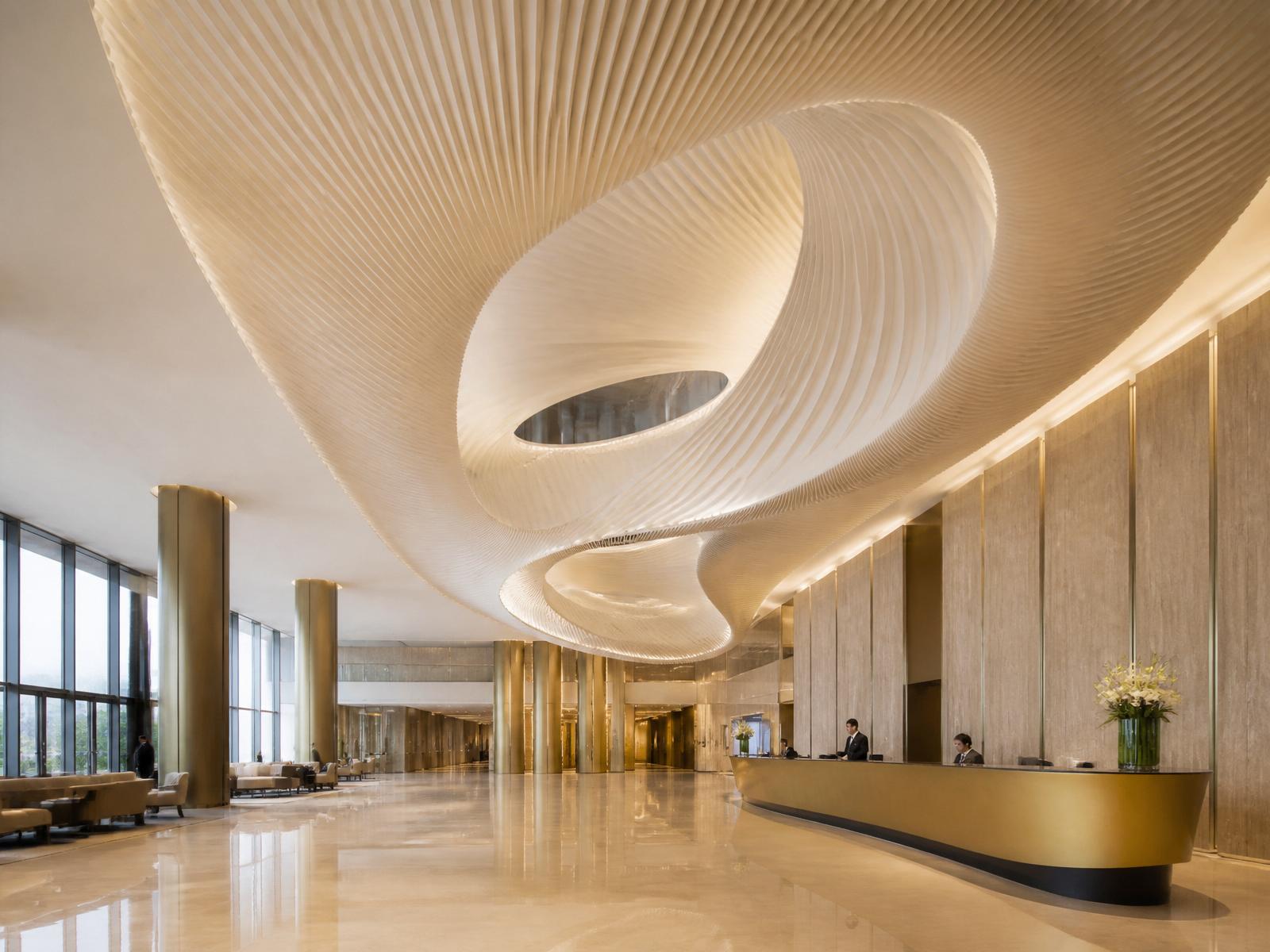
The highest-value applications are the spaces where guests linger and photograph: reception, bar, lobby lounge, restaurant, spa, and hero guestrooms. These are the spaces where a signature printed piece — a sculpted reception desk, a continuous bar back, a headboard-plus-desk carved from a single form — creates the property's visual identity.
Secondary applications include wayfinding, donor recognition, elevator lobby architecture, corridor accents and back-of-house branded moments. These aren't the hero pieces, but they extend the language across the property.
Code, fire and cleaning considerations
Hotel architecture is fire-code sensitive. The material families used for hospitality — typically mineral composites and Class A rated polymer systems — are specified with independent fire, smoke and toxicity testing per project. The specialty fabricator provides the testing documentation; the architect of record and the AHJ approve the substitution.
Cleaning is the operational consideration. Every printed surface is delivered with a maintenance protocol appropriate to hotel housekeeping — approved cleaning agents, refinish intervals, and reprint options for damaged panels.
Timeline and installation windows
Signature hospitality pieces typically run 10 to 20 weeks from approved geometry to installed piece — comparable to traditional custom millwork or GFRC. The installation window is often shorter, because a printed reception counter arrives as one crated piece and hangs in a night rather than being site-built over a week.
For property rollouts (guestroom feature walls across a full property), production is sequenced against the construction schedule so elements arrive per-floor as the drywall is closed.
Signature vs. rollout
Two distinct programs. Signature pieces are one-of-one — the hero reception, the bar, the spa reception counter. Rollout pieces are repeatable modules — guestroom headboards, corridor accents, wayfinding — printed to a per-floor count and installed in dark hours.
Most projects combine both: one or two hero moments in the public rooms and a rolled-out identity throughout the guest journey.
Common questions
- Can printed hotel architecture meet Class A fire code?
- Yes — mineral composite and specialty polymer systems used for hospitality are specified with independent fire testing per project and approved by the AHJ.
- How is a printed reception counter installed?
- Typically as one crated piece delivered to site and hung on a pre-installed sub-structure — a single-shift installation in dark hours.
- What happens if a guest damages a printed panel?
- The source geometry is archived and damaged panels are reprinted to a defined SLA — typically two to three weeks.